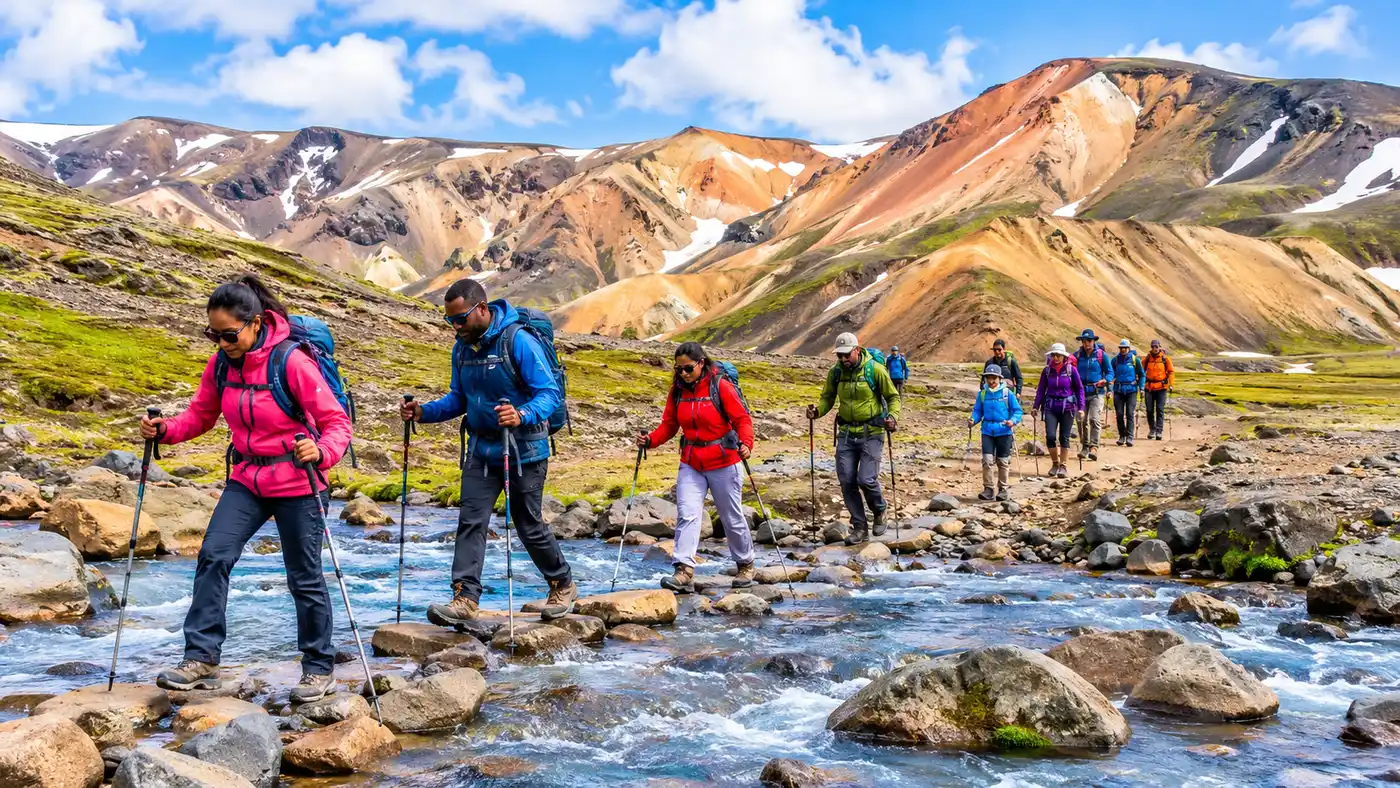
Laugavegur Trail Packing List & Food: Gear & River Crossing Advice
Standing beside the riverbank at Bláfjallakvísl, the water looks deceptively calm until you step in and realize it is forty degrees of glacial runoff moving fast enough to take your knees out. Your pack suddenly feels ten pounds heavier when you are balancing on slick basalt pebbles. Dialing in your laugavegur trail packing list before boarding the highland bus in Reykjavik is the single best favor you can do for yourself, because out here there are no gear shops, no second chances, and certainly no heating inside a storm-battered tent.
Iceland will throw horizontal sleet, driving sand, blinding sun, and knee-deep river crossings at you within a six-hour window. If your gear gets wet on day one at Hrafntinnusker, it will probably stay wet until you reach the birch forests of Þórsmörk. This guide breaks down what actually belongs in your pack, what to eat, how to manage river fords safely, and the quiet logistics that guidebooks usually skip.
Book your landmannalaugar hike experience:
Essential Clothing and the Laugavegur Packing List Core
Cotton will ruin your hike. It absorbs moisture, refuses to dry in 90 percent humidity, and steals body heat the moment the wind kicks up over the volcanic passes. Your foundational clothing must be merino wool or high-grade synthetics, period. A midweight wool base layer top and bottom, paired with a grid fleece or active insulation piece, creates a system that works while climbing 500 vertical meters through rhyolite steam vents.
Outer layers are where people fail most often. Cheap rain jackets with coated membranes sweat out instantly on the uphills and wet out from the outside within two hours of steady southern Icelandic rain. You need a dedicated 3-layer waterproof shell jacket with pit zips and at least a 20,000 mm hydrostatic head rating, alongside matching rain pants that you can pull on without removing your boots.
Pack two pairs of hiking socks for walking, plus one thick pair preserved inside a dry bag purely for sleeping. If you hike in the rain all day, sliding your clean, dry feet into damp hiking socks tomorrow morning is miserable, but you must preserve that sacred dry night pair. Add a fleece beanie, thin windproof gloves, and a pair of waterproof over-mitts. When temperatures hover near freezing on the high plateau, wet fleece gloves turn into ice blocks on your hands.
Pro tip: Line your entire backpack with an unbroken heavy-duty contractor trash bag before packing your gear in dry sacks. Integrated pack covers act like sails in 40-knot highland gusts and will rip straight off or allow water to pool at the base of your pack.
Surviving the Laugavegur River Crossing: Footwear and Technique
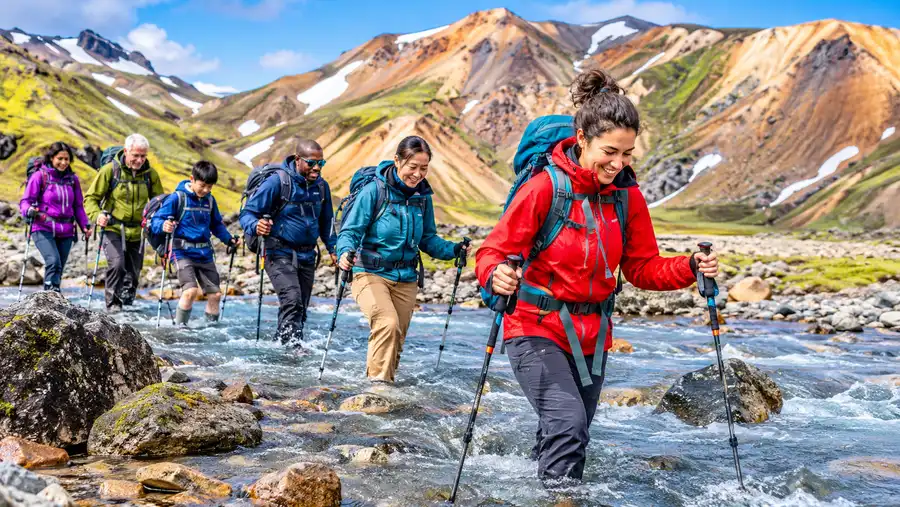
Every hiker worries about the river crossings, and honestly, they should. You will ford several unbridged rivers across the route, with Bláfjallakvísl and the wide, braided Þröngá being the most infamous. Glacial melt increases significantly on warm afternoons or after persistent rain, transforming ankle-deep streams into thigh-high torrents full of opaque grey sediment that hides boulders underneath.
Your choice of footwear for a laugavegur river crossing will dictate whether you stroll across or slice your toes on jagged lava. Flip-flops get torn off your feet by the current within two seconds. Barefoot crossing is asking for a deep laceration that ends your trip right there. Neoprene river booties with stiff rubber soles or old trail runners worn with neoprene socks offer the best traction and protect against the biting chill of water straight off the glaciers.
| Footwear Option | Grip on Wet Lava | Toe Protection | Weight Penalty | Drying Time |
|---|---|---|---|---|
| Neoprene Wading Booties (Stiff Sole) | Excellent | High | Around 420g | Moderate |
| Dedicated Trail Runners | Very Good | High | Around 600g | Slow |
| Sport Sandals with Straps (Chacos/Tevas) | Good | Low to Medium | Around 520g | Fast |
| Foam Clogs (Crocs with heel strap) | Poor | Moderate | Around 310g | Instant |
Crossing technique matters just as much as what is on your feet. When facing a deep laugavegur trail river crossing, unbuckle the hip belt and chest strap of your backpack completely. If you slip and go under in deep current, a buckled 15-kilo pack will pin you facedown on the riverbed; you must be able to ditch it instantly.
- Scan the braid: Walk along the bank to locate the widest, shallowest point of the river rather than plunging in at the first marker trail post.
- Face upstream: Lean slightly into the current with trekking poles planted firmly out in front to create a sturdy tripod base.
- Step sideways: Shuffle across one foot at a time, feeling for stable footing beneath the opaque silt before transferring weight.
- Cross together: Lock arms at the elbows in a line of two or three people with the strongest hiker upstream breaking the main flow.
Meal Planning, Calories, and Landmannalaugar Food Realities
You burn significantly more calories along this route than on an average woodland walk because wind resistance, heavy packs, and cold damp air drain your glycogen stores fast. Aim for roughly 3,000 to 3,500 calories per day, balanced toward fat and simple carbs. Commercial freeze-dried dinners are the standard laugavegur trail food choice because they provide lightweight calories and require nothing more than boiling water, which saves stove fuel.
Stock up completely in Reykjavik before heading out. Supermarkets like Bónus or Krónan carry vacuum-packed flatbread (flatkökur), brown cheese, salami, cured mutton, nuts, and chocolate bars at normal retail pricing. If you try to assemble your rations at the trailhead, you will be disappointed. There is very little landmannalaugar food available outside what you bring on your back.
At the Landmannalaugar camp, you will spot the landmannalaugar mountain mall, which consists of two old green school buses retrofitted into a mobile convenience shop and cafe. It is a fantastic spot to grab a hot coffee, a cinnamon bun, or an emergency gas canister, but do not rely on it for full expedition resupplies. The selection is small, items sell out quickly during July, and prices naturally reflect the immense cost of hauling goods over washboard dirt tracks.
Carry a dependable canister stove like an MSR PocketRocket or an integrated Jetboil system. The small 230-gram isobutane screw-thread canisters are readily available in outdoor stores across the capital and usually last one hiker five to six days of boiling water for breakfast oats and evening pouches. Make sure to pack plenty of dense, pocket-sized snacks like marzipan, salted cashews, and licorice to eat on quick five-minute trail breaks without taking your pack off.
Book your landmannalaugar hike experience:
Camp Setup, Electronics, and Highland Rules
Pitching a tent in the southern highlands is unlike setting up in a sheltered forest. The volcanic ground ranges from rock-hard compressed pumice to completely loose black ash. Standard aluminum tent pegs bend easily or pull out the second a gust sweeps over the ridge. Bring at least six heavy-duty Y-stakes, and be prepared to pile large basalt rocks on top of your stake points to keep your fly taut.
A true three-season tent with a sturdy aluminum pole geometry is mandatory. Ultralight single-wall trekking pole shelters tend to flap violently and can shear off guylines when the wind roars across the barren plains near Álftavatn. A sleeping bag with an ISO comfort rating of -2°C (28°F) paired with an insulated sleeping pad rated with an R-value of 3.5 or higher will keep ground chill from robbing your sleep.
Keep your battery banks inside your sleeping bag at night. Low temperatures sap lithium-ion charge rapidly, leaving you with a dead phone or GPS device by morning. A 10,000 mAh external battery is plenty for keeping a phone alive over four days if you keep it switched to airplane mode while following the markers described in our detailed Laugavegur trail guide.
Note: Operating a landmannalaugar drone inside the nature reserve and surrounding protected areas is strictly illegal without written permission from the Environment Agency of Iceland. Rangers regularly issue heavy on-the-spot fines to preserve bird habitats and tranquility.
Pack Weight, Luggage Transfers, and Practical Tips
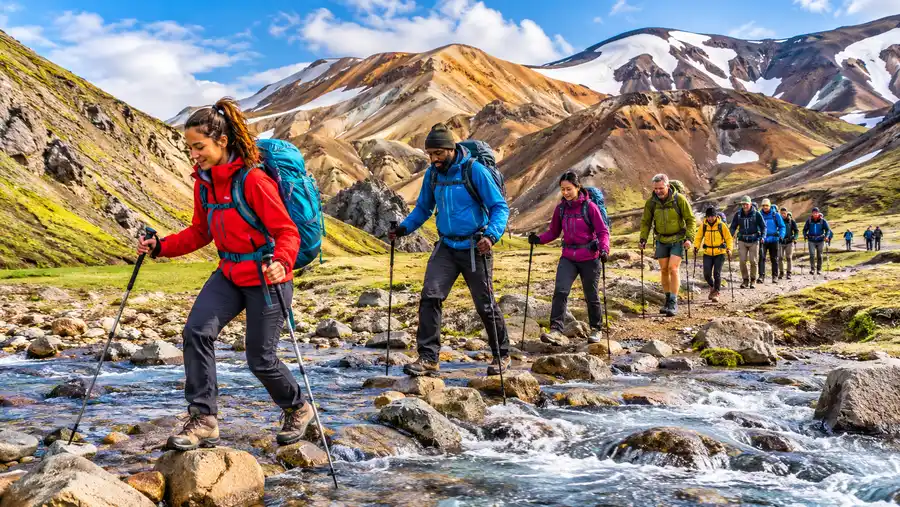
A sensible base pack weight for this trek sits around 11 to 13 kilograms without food and water. Once you add rations for four days and a liter of drinking water, your total load should realistically land around 16 to 17 kilograms. Water is abundant along almost the entire route from snowmelt streams and clear mountain springs, so carrying more than one liter at a time is unnecessary dead weight, except on the volcanic desert stretch between Hvanngil and Emstrur.
If carrying that much weight over steep scree slopes sounds daunting, you can take advantage of laugavegur trail luggage transport services operated by local highland bus companies. These services collect your heavy duffel bag in the morning from outside the hut warden office and transport it via 4x4 river-crossing vehicles to your next scheduled campsite. It allows you to hike with a modest 25-liter daypack containing just your layers, snacks, and river shoes.
Here are several practical laugavegur trail tips that make the difference between a punishing grind and a memorable trek:
- Keep river shoes accessible: Pack your water shoes and towel in an outside mesh pocket so you are not unpacking your entire bag on a windy riverbank.
- Carry blister patches early: Apply Leukotape or hydrocolloid dressings at the first faint sensation of friction rather than waiting for an open wound.
- Respect sudden forecasts: Check the local warden's weather board every single morning to prepare for extreme Landmannalaugar weather swings before setting off toward the next shelter.
- Pack a thin sit pad: A small scrap of closed-cell foam lets you sit comfortably on freezing basalt rocks during short trail lunches without soaking your trousers.
Frequently Asked Questions about laugavegur trail packing list
What type of water filter do I need for the trail?
None, honestly. Highland streams flowing from natural springs in Iceland are remarkably clean, pure, and safe to drink directly from the source without filtering or boiling. Just avoid gathering water directly beside geothermal vents or downstream from busy camping huts.
Can I recharge my electronics at the mountain huts?
Huts run primarily on small solar and generator systems. Charging is generally reserved for hut staff, safety radios, or emergency medical gear, though some wardens permit phone charging for a fee around 1,000 ISK when capacity allows. Carry your own power bank.
Do I really need full waterproof trousers if my jacket is top tier?
Yes, absolutely. The rain in the Icelandic highlands comes sideways driven by gale-force winds. Without waterproof pants, runoff from your jacket soaks your thighs and drains straight down your socks into your hiking boots, inducing hypothermia rapidly.
Can I buy stove fuel canisters at Landmannalaugar?
Usually yes, either from the warden station or the bus shop, but stock can fluctuate during peak weeks. It is far safer to pick up standard screw-top gas canisters at an N1 gas station or gear shop in Reykjavik before departure.
Quick Reference
- Base pack weight: 11-13 kg
- Sleeping bag comfort rating: -2°C (28°F)
- River shoes: Neoprene booties or trail runners
- Daily calories: 3,000 - 3,500 kcal
Book your landmannalaugar hike experience:
Before You Lace Up
Iceland's backcountry does not tolerate shortcuts. Packing properly is not about buying the flashiest branded gear; it is about respecting how violently rain, cold, and glacial currents can humble an unprepared hiker. Once your boots are tied, your pack is lined, and your river shoes are clipped outside your sack, you are ready to walk through some of the wildest volcanic landscapes on the planet.
Read more about landmannalaugar hike.